
Why we’re called Hummingbird
I will be a hummingbird.
Our name comes from a story told by the late Prof. Wangari Maathai, Kenyan activist, founder of the Green Belt Movement, and the first African woman to win the Nobel Peace Prize. It is the reason this studio exists, so it deserves telling properly.
CHAPTER 01
The story, as she told it
One small bird. One drop at a time.
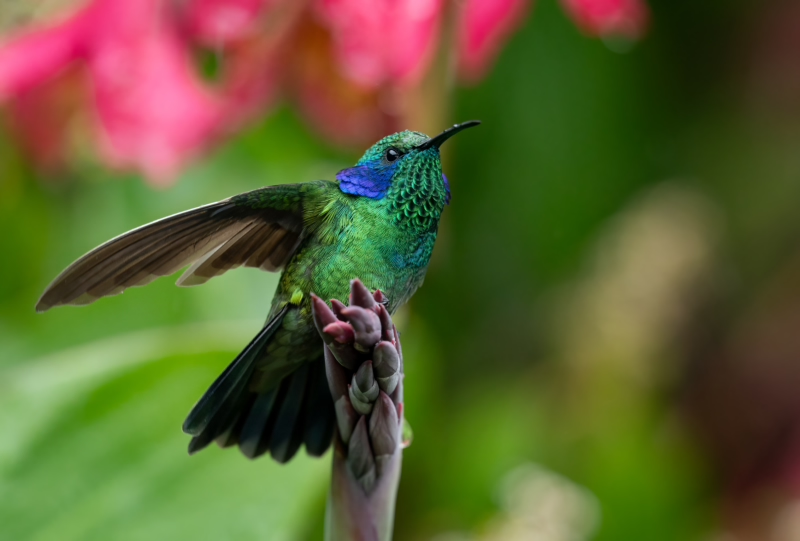
One day a great forest caught fire. The flames moved faster than anything could run, and the animals fled to the edge of the trees. There they stood, watching their home burn, feeling overwhelmed and powerless. All of them, except one little hummingbird.
The hummingbird flew to the nearest stream and took a single drop of water in her beak. She carried it to the fire and let it fall on the flames. Then she flew back for another. Up and down she went, as fast as she could, one drop at a time.
The other animals watched her. Animals far bigger, like the elephant, whose trunk could carry real water. They did nothing but stand and discourage her.
What do you think you can do? You are too little. The fire is too big. Your wings are too small and your beak carries only a drop.
The hummingbird did not stop. Without wasting any time, she turned to the others and said, “I am doing the best I can.”
Maathai never promised the story a tidy ending. Perhaps the hummingbird shamed the bigger animals into helping and the forest was saved. Perhaps the fire was too great.
The point was never the outcome. The point is which animal you choose to be.
“I will be a hummingbird. I will do the best I can.”
CHAPTER 02
She planted trees, one at a time, until there were fifty million.
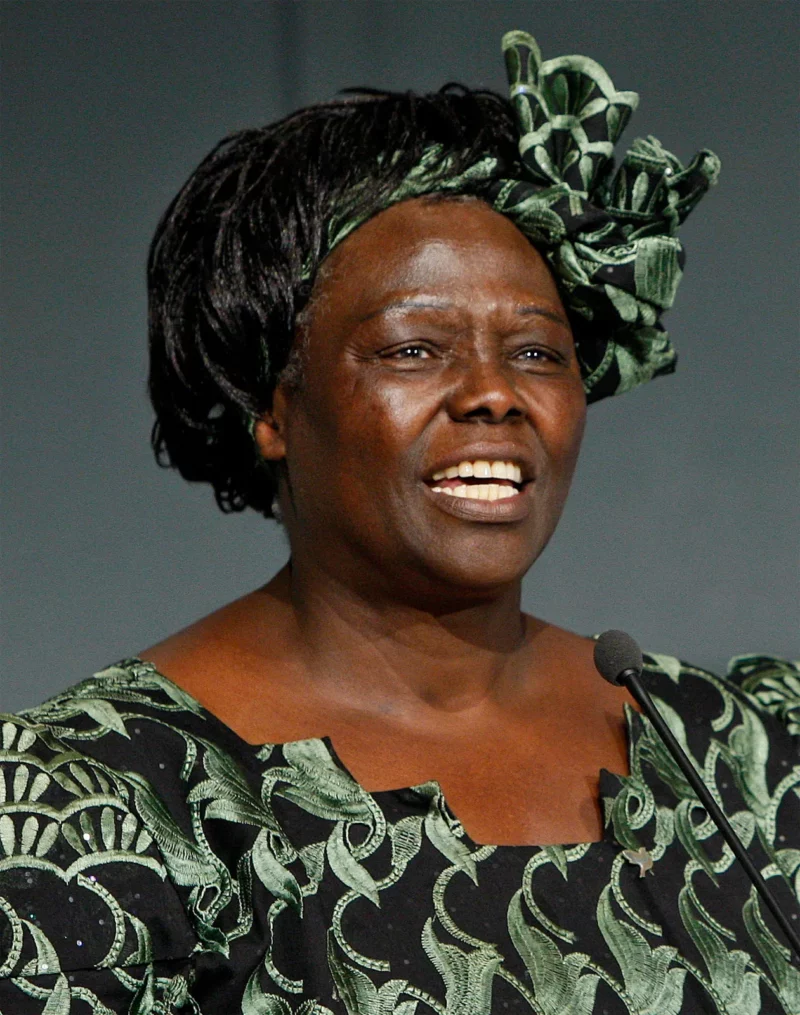
The teller
Wangari Maathai was a biologist from Nyeri, Kenya, the first woman in East and Central Africa to earn a doctorate. In 1977 she founded the Green Belt Movement, paying rural women a small stipend to plant seedlings. The movement gave the work its environmental shape, but it also gave women income and a public voice.
She lived her own parable. Drop by drop, tree by tree, she proved that the size of the act matters less than the decision to act at all.
- Founded the Green Belt Movement in Nairobi
- 1977
- Trees planted across Kenya by women’s networks
- 50 million+
- Nobel Peace Prize, the first African woman to receive it
- 2004
In her own words
Watch Prof. Maathai tell the story.
Nothing loads from YouTube until you press play. The same courtesy we build into every site we ship.
CHAPTER 03
What it means for us
Carry the drop we can carry.
No single website will change the world. Hummingbird is not interested in pretending otherwise. But a website is made from hundreds of decisions: how much content it carries, how clearly it speaks, whether somebody can use it with a keyboard or a screen reader, how large the images are, which scripts are allowed to run, and where it is hosted. Each decision is small in isolation. Together, they shape everything.
So we do what the hummingbird does. A lighter page. A faster site. A greener host. One drop at a time.
Our promise is grounded, not grand:
- We will ask what is necessary.
- We will explain the trade-offs.
- We will measure what we reasonably can.
- We will be honest about uncertainty.
- We will keep looking for a better next decision.
It is why our logo carries a water drop, and why every page we ship publishes its own carbon cost in the footer.
Credits & further reading
The story is old and well-travelled. These tellers carried it to us.
-
Wangari Maathai & the Green Belt Movement
First-hand context on how the work and movement began.
greenbeltmovement.org -
“I will be a hummingbird”
Prof. Maathai tells the story in I’m a Child Because (2008).
YouTube -
Flight of the Hummingbird
Michael Nicoll Yahgulanaas retells the story for younger readers.
-
Rotterdam School of Management
Where modern tellings trace the story and its influence.
We all must play our part.
If you are ready to make the next set of decisions more carefully, we would be glad to hear what you are working on.